Past event

Wetskills-Romania 2026: Finals at Expo Apa Conference
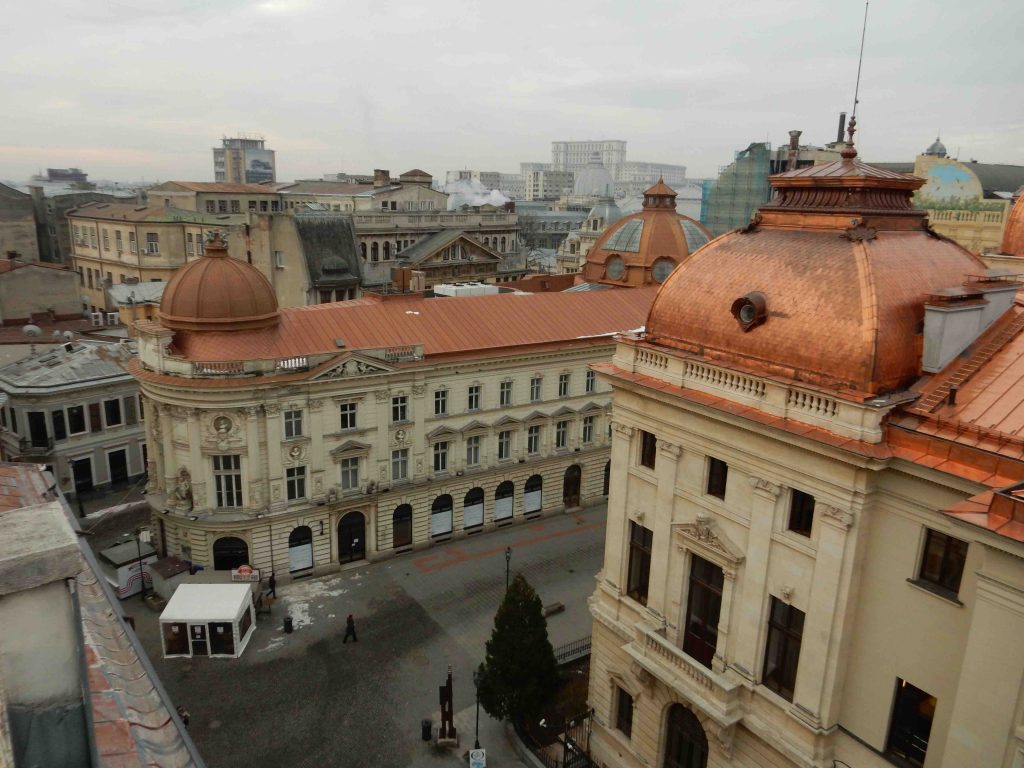
Wetskills Foundation was excited to be back in Romania for the 8th Wetskills Challenge in this country. From 29 August to 11 September, we had a great programme with 3 teams and real-life water challenges. Romania offers a dynamic context, with pressing topics such as water quality, infrastructure upgrades, rural access, and climate resilience: creating a perfect learning environment for innovation and impact.
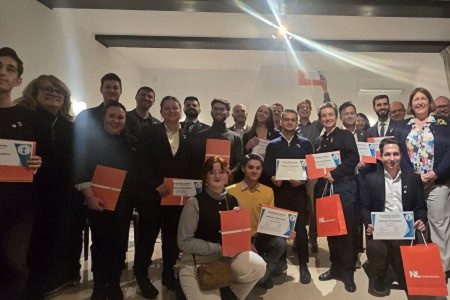
For this event we had a great group of 14 participants from Romania and The Netherlands. They were collaborating in multidisciplinary teams, supported by local academia and sector partners, developing practical and out-of-the-box solutions for the case challenges. The finals were at the Expo Apa Water Exhibition, offering a unique opportunity to present ideas to leading water professionals.
Watch the video of this event!
Practical information
Follow Wetskills

Joining this Wetskills Event – What do you get?
A unique learning experience where you will tackle real-life water challenges with your own team!
- You will develop expertise in international cooperation, problem-solving, cross-cultural understanding, and interdisciplinary teamwork.
- You will learn and deepen your understanding of the Romanian water sector, gaining insights into key stakeholders, organizations, contemporary issues, and existing business opportunities.
- You will increase your networking and presentation abilities through pitch and poster
- You will get the opportunity to connect with other international water students/young professionals.
- You will immerse yourself in the great city Bucharest and outside during the team building ac tivituies (exact locations TBC) exploring water-related sites and engaging with local water professionals.
- You will join parts of Expo Apa Water Exhibition (incl. Wetskills Finals & Awarding Ceremony)
- Upon program completion, receive a certificate of participation, officially joining the ranks of over 1500 Wetskills Alumni.
More information
For additional information regarding participation and other details, please contact Elena Manea, elena.manea@wetskills.com or Johan Oost, johan.oost@wetskills.com.


Event Cases
Case 1: Wastewater re-use for landscaping purposes

Case owner: Water Authority Amstel, Gooi and Vecht (The Netherlands)
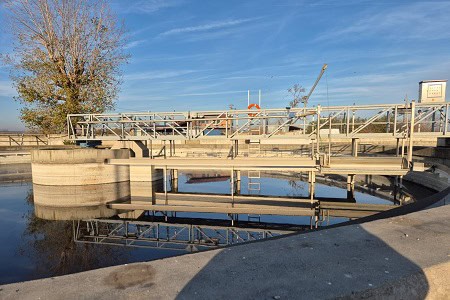
Bucharest is increasingly affected by hot and dry summers, resulting in growing pressure on freshwater resources and a higher demand for urban green spaces that help cool the city. At the same time, large volumes of treated wastewater are discharged from wastewater treatment plants and could potentially be reused for landscape irrigation. Although this solution is technically feasible and already applied in several European regions, implementation is often hindered by legal, financial, institutional and societal challenges. In this case, participants will explore how wastewater reuse could become a viable solution for irrigating urban green areas in Bucharest. The focus is on identifying key barriers, learning from successful examples elsewhere, and mapping the stakeholders involved. The outcome should provide insights into the conditions needed to enable future wastewater reuse initiatives.
Case 2: Sustainable dredging and valorization at Paleu reservoir

Case owner: National Administration Romanian Waters
Sediment accumulation in Paleu Reservoir has significantly reduced active flood storage capacity, degraded water quality, and increased risks to hydraulic infrastructure. The reservoir serves as a pilot for adressing these problems in river basins. Tackling this challenge requires moving away from conventional disposal practices toward sustainable, circular economy solutions. This initiative focuses on developing an integrated operational strategy encompassing low-impact ecological dredging, sediment dewatering, and high-value resource recovery—transforming dredged material into certified eco-construction products and soil enhancers. By navigating national and EU regulatory and End-of-Waste frameworks, the project establishes a compliant model for secondary raw material reuse. Crucially, the desired solution is scalable, derived from the Paleu pilot and can be expanded to large and very large (Class A and B) strategic reservoirs.”
Case 3: Unlocking the shared value of water in Pasarea Subcatchment

Case owner: Philip Morris International (Romania)
Water is much more than cubic metres. This case challenges a multidisciplinary Wetskills team to help Philip Morris Romania strengthen its Alliance for Water Stewardship (AWS) approach by uncovering the wider value of water in the Argeș–VedeaRiver Basin. Alongside water quantity and quality, the team will explore ecological, social, cultural and recreational values, local vulnerabilities and opportunities for collective action. Using stakeholder consultations, GIS mapping, ecosystem-services assessment and available environmental data, the team will identify priority water-related areas and propose practical stewardship actions. It will also explore a Shared Water Value Index that combines physical and ecological indicators with stakeholder-defined values. The result will support AWS V3.0 implementation and inspire impactful, catchment-level partnerships and projects.
Event Partners




Previous Wetskills Events in Romania
Follow Wetskills