
Deadlines Day
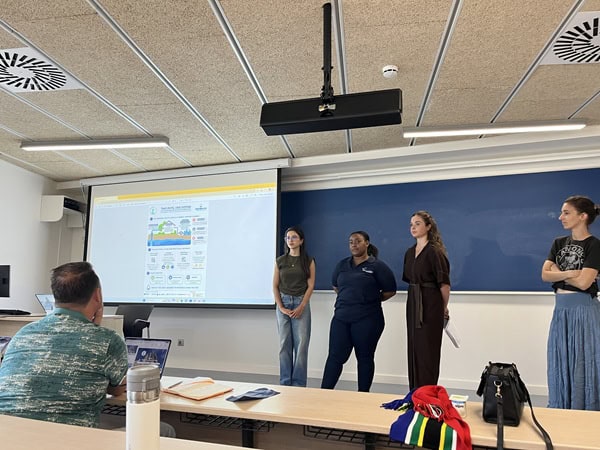
Wetskills-Span 2026 – Blog 11 – Today was the final deadline for both our posters and papers, making it an important day. We started the day by receiving feedback on…



A dedicated Wetskills event with the main theme: Water Footprint and Act4Water into Practice
Wetskills Foundation is proud to have organized the first-ever Wetskills Water Challenge in Spain, in the amazing and beautiful City of Barcelona from 12–24 September 2026.
In this exciting edition, participants from 10 different coutries – Argentina, Colombia, Denmark, Egypt, Iran, Netherlands, Poland, Spain, the United States, and South Africa – were working on one shared and urgent theme: Water!
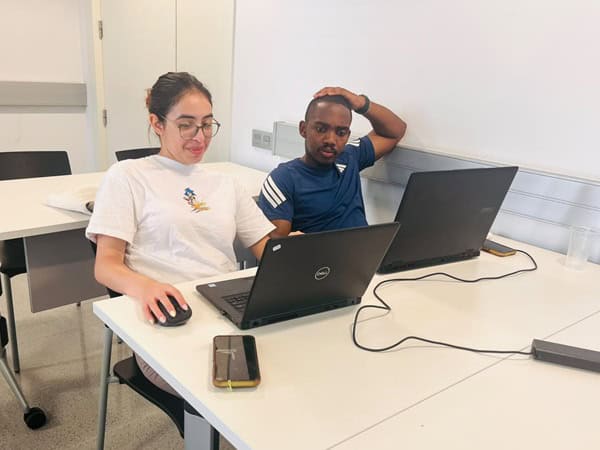
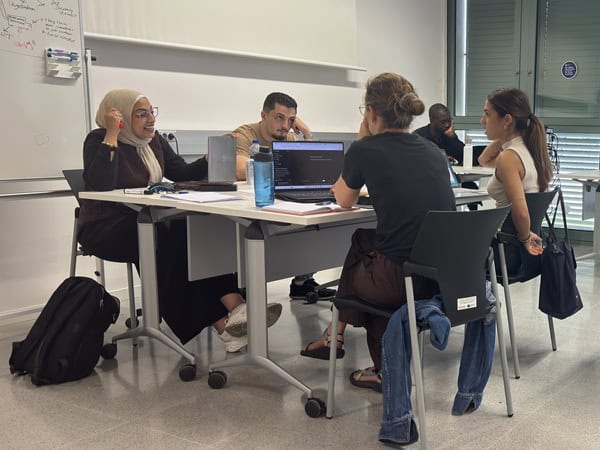
During this two-week international programme, participants were collaborating in multidisciplinary teams, supported by local academia and sector partners, developing innovative, practical and out-of-the-box solutions for 4 real-life water challenges. A special focus was on the Act4Water Standard (read more). Participants were collaborating closely with case owners and experts while expanding their international network in one of Europe’s most dynamic and inspiring cities.
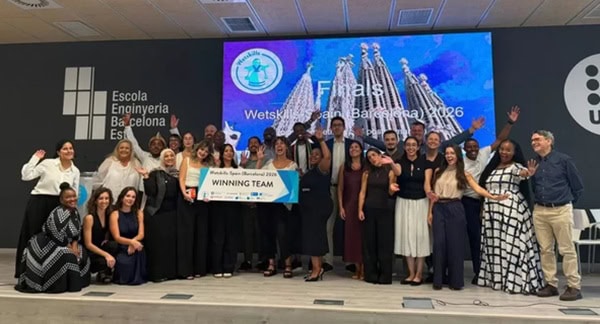
The programme concluded with the Finals & Awarding on 23 September 2026, where the teams pitched their concepts to a professional jury and audience from the international water sector.
Barcelona combines innovation, sustainability and Mediterranean energy, making it the perfect location for this first edition focused on turning Water Footprint ambitions into real action.
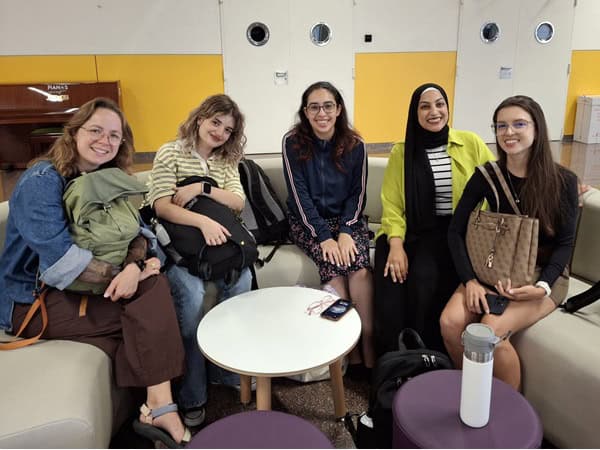
Participants and external experts of this event

Watch the event’s movie
A unique learning experience where you will tackle real-life water challenges with your own team!
More information
For additional information regarding participation and other details, please contact Johan Oost, johan.oost@wetskills.com.


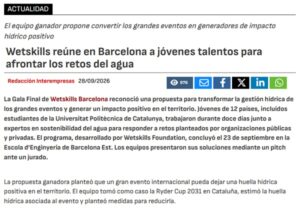
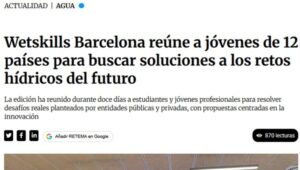
The Wetskills Final Gala closes twelve days of intensive work between young talent and water sustainability experts. The winning team presented a proposal for water-positive management of major events.

Case owner: Veolia
Mediterranean tourism destinations are increasingly recognizing water as a strategic priority. Many hotels have invested in efficiency measures, and some are measuring their water footprint. Yet the tourism sector remains largely at the efficiency stage — reducing consumption and improving operations. The next frontier is moving beyond efficiency to genuine water regeneration: creating integrated strategies that combine operational improvements with local water restoration projects that benefit the basin and build long-term resilience. This case invites participants to design an innovative concept that helps tourism destinations move from “doing less harm” to “creating genuine positive impact” — and doing so in a way that makes economic and operational sense.
Case owner: Water Authority Hollands Noorderkwartier
Spain is very experienced in dealing with drought and water scarcity. Water reuse has become an important component of water management, and treated wastewater is reused in agriculture, urban applications and industry. This is a technological challenge, but also requires clear regulation, social acceptance, cooperation and financing. In the Netherlands, water reuse is still struggling to gain momentum. For a long time, the Netherlands was known as a country of excess water. Climate change is changing this picture, with longer dry periods, increasing water demand and salinisation. Discarding used water as waste is outdated in a society that moves towards a circular economy. What opportunities are there and what needs to be done for the Netherlands to accelerate the adoption of water reuse?
Case owner: Department of Water and sanitation of South Africa
Under South Africa’s National Water Act, ‘Schedule 1 water use’ permits water use for domestic purposes, small-scale gardening, and watering livestock without requiring a formal water use license. This provision was designed to safeguard basic human rights and support subsistence livelihoods. However, a growing number of households and farms are ‘double-dipping’ into water resources by abstracing uncontrolled amounts of groundwater from private boreholes, while also maintaining a connection to the municipal grid for basic access. This creates a severe financial and operational imbalance, as municipalities must build, maintain, and allocate infrastructure capacity for these properties, yet they cannot collect sufficient service fees from users of these unmetered boreholes. Concurrently, borehole drilling and abstraction volumes are threatening the long-term sustainability of local aquifers. How to solve this situation?

Case owner: Act4Water
How can events give back more water than they consume? Every major international event carries a water footprint that extends far beyond what is visible on site. It is embedded in venues, catering, mobility, accommodation and the supply chains behind them; direct and indirect, and often substantial. Veolia has developed methodologies to quantify this footprint and is already addressing part of the challenge by replacing single-use plastic with connected, refrigerated water fountains. The ambitious question is whether an event can move beyond neutrality: restoring or replenishing more water in a region than it uses, and doing so in a way that is credible, verifiable and worth talking about. This case invites participants to develop an original concept for how a major international event could achieve Water Positive status.