Wetakills-Spain 2026 – Blog 6 –
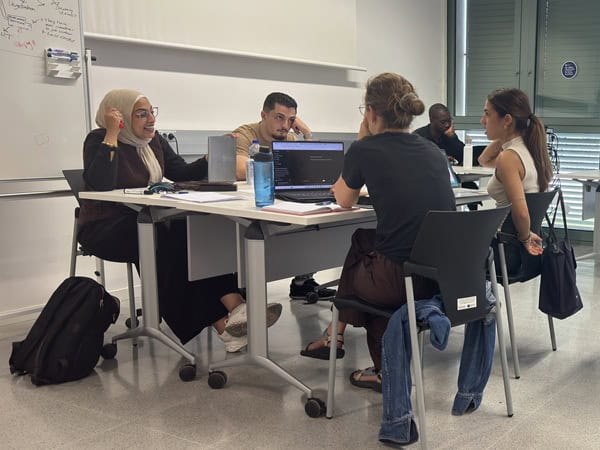
Day 6 shifted the focus from developing ideas to communicating them. The morning session explored the three final formats that will bring each Wetskills case together: a two-minute pitch, a concise paper for the case owner, and an A0 poster that must make the problem, solution and benefits immediately understandable. The common lesson was simple: a strong concept only creates impact when the audience can quickly understand why it matters. At the afternoon, the teams were working on their cases.
Pitch time: Two minutes to make the message land
Precious challenged us to think of the pitch as a story rather than a compressed report. In only two minutes, teams need to show enthusiasm, introduce the pain clearly, explain the problem and connect it naturally to the proposed solution. Instead of trying to fit in every detail, the objective is to leave the audience with one main message – and enough curiosity to want to know more. Timing was treated as part of the storytelling. The training encouraged us to establish the pain quickly, devote most of the available time to the concept, finish with energy and keep a small reserve rather than speaking until the final second.
Learning by judging previous pitches
The session became especially practical when Precious showed pitches from earlier Wetskills editions. After each example, participants identified what worked and what did not. This exercise made the principles tangible: clarity, structure, energy and audience connection were easier to recognize when we could compare different ways of presenting the same kind of challenge.
Pitch checklist: one clear message • pain → problem → solution
• enthusiasm • curiosity • body language
The second part of the training focused on how the same project should work at different levels of detail. The pitch creates interest, the poster explains the concept visually, and the paper captures the substance behind the work for the case owner.
The paper: document the thinking – The paper is where teams preserve the reasoning behind the final concept and communicate the work to the case owner. The proposed outline includes an introduction, problem statement, a one-sentence objective, scope, method and references. Unlike the pitch, it gives room to explain choices and show the work that supports the final recommendation.
The poster: make the concept visible – For the poster, the priority is immediate clarity. The A0 portrait layout should combine the title and team information with a clear problem introduction, the concept, how the solution works, its effectiveness and the associated benefits. Visual support is
essential, and examples from previous editions were again used to discuss what makes a poster easy – or difficult – to understand.
A useful test for the poster: Can a reader quickly see
Which problem we are solving,
Why it matters, What our concept is,
and How well it solves the problem?
Deadlines ahead – then back to the cases – The training closed with the milestones for the final days: the first supervisor pre-presentation on Monday, 21 September; the second supervisor pitch and the pitch for everybody on Tuesday, 22 September; and the finals and awarding on 23 September. With the expectations now clear, the afternoon was left open for teams to return to their cases and turn research into a sharper story.
The takeaway from Day 6: one idea, three formats
– each with a different level of detail, but all telling the same clear story.
Blog by Thamires Bittencourt