
Birds & How We Found Our Wings
Wetskills-Zimbabwe 2026 – Blog 7 – Day 7 should have been titled The Day We Tried to Rescue a Bird, Got Roasted by Our Peers, and Then Ate Our Feelings. Here…

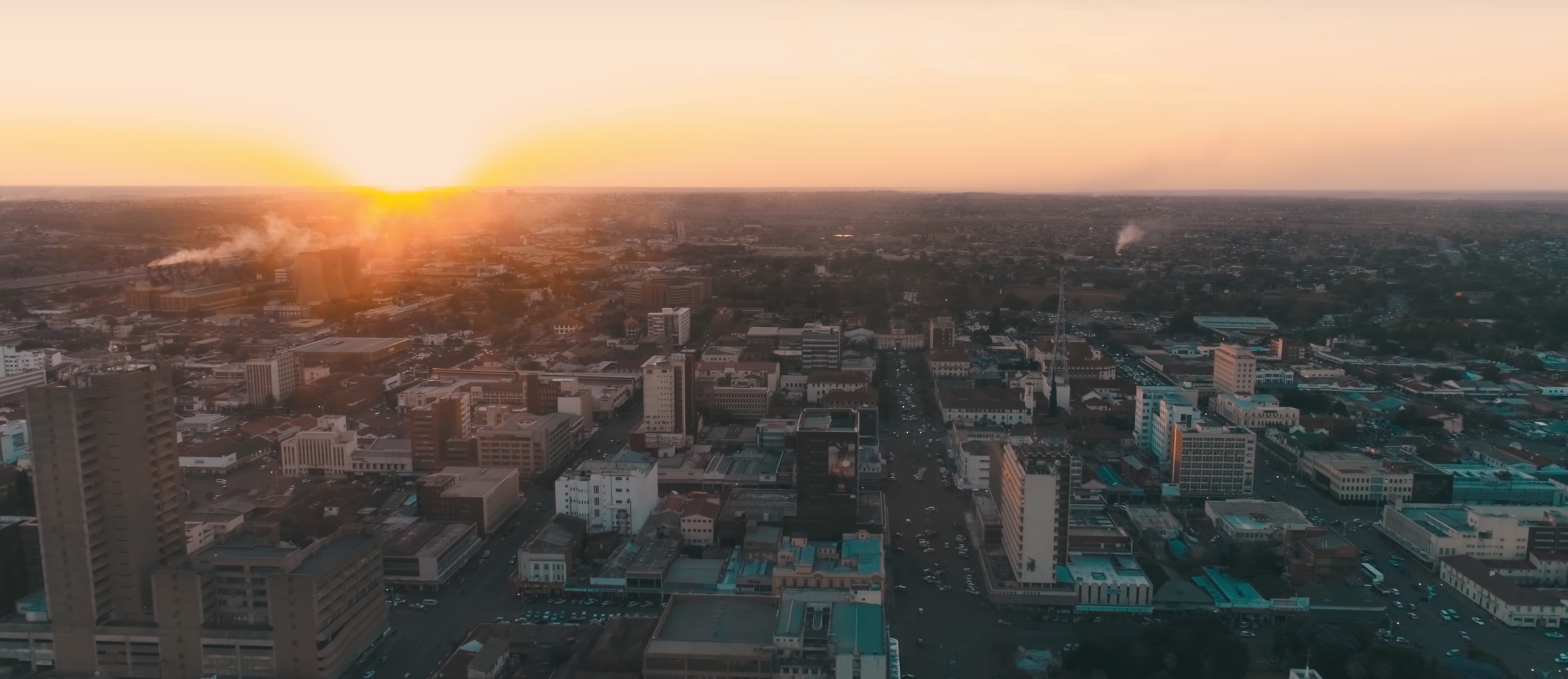

After the inspiring success of the very first Wetskills edition in Zimbabwe, we were thrilled to be back! This next chapter was taking place again in Bulawayo from 10 to 22 May 2026.
A group of 30(!) participants was working in mixed teams on real-life cases. The program was combining field visits, teamwork, cultural exchange, and the exciting finals event in Bulawayo. It continued the momentum built during the pioneering first edition in Zimbabwe, and the other SADC events.
Wetskills Zimbabwe 2026 brought again energy, innovation, and new cross-border collaborations. Case owners, partners, and participants: join us and be part of shaping the water-smart future of Zimbabwe and the wider SADC!


A unique learning experience where you will tackle real-life water challenges with your team!
More information
For additional information, please contact Craig Tinashe Tanyanyiwa, craig.tinashe@wetskills.com (Zimbabwe event) or Johan Oost, johan.oost@wetskills.com (Wetskills in general).


Case owner: ACEWATER
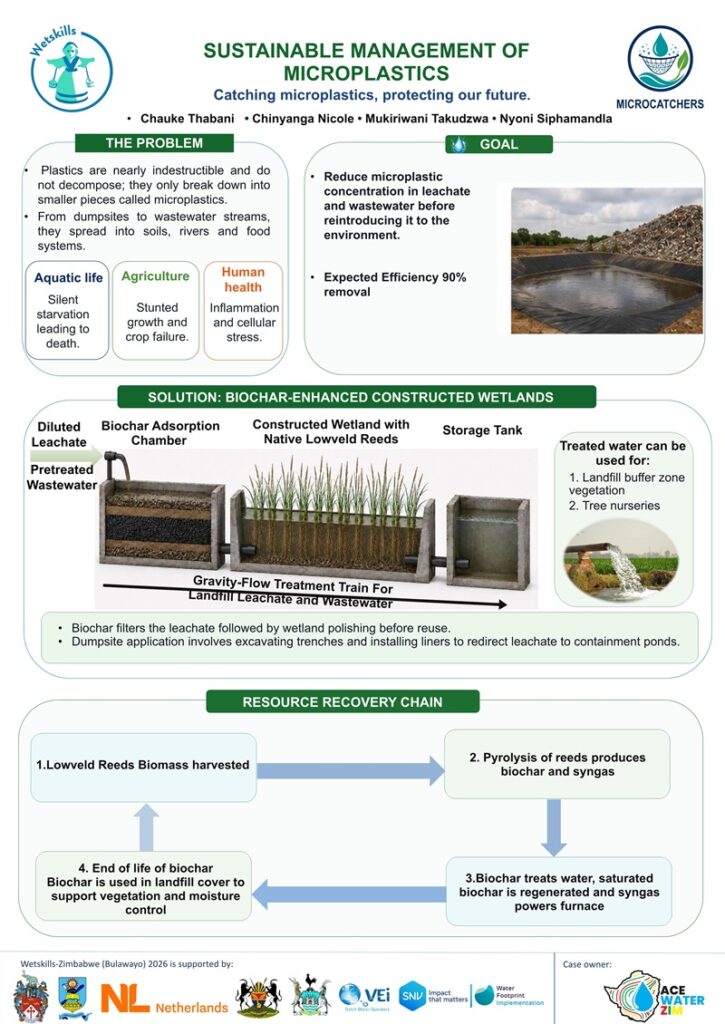
The extensive use of plastic has caused the incorporation of microplastics into soil and water. Due to their persistence and nearly indestructible nature, microplastics pose an environmental crisis, and a potential risk to ecosystems as well as human health. Various tailored processes are available for capturing and breaking down these microplastic particles. The integration of these processes into wastewater treatment systems presents a promising approach toward efficient, scalable, and sustainable microplastic removal, promoting cleaner aquatic conditions and improved ecosystem health. How could we apply these processes for sustainable Microplastic Management from Landfill Leachate?
Case owner: Water Footprint Implementation
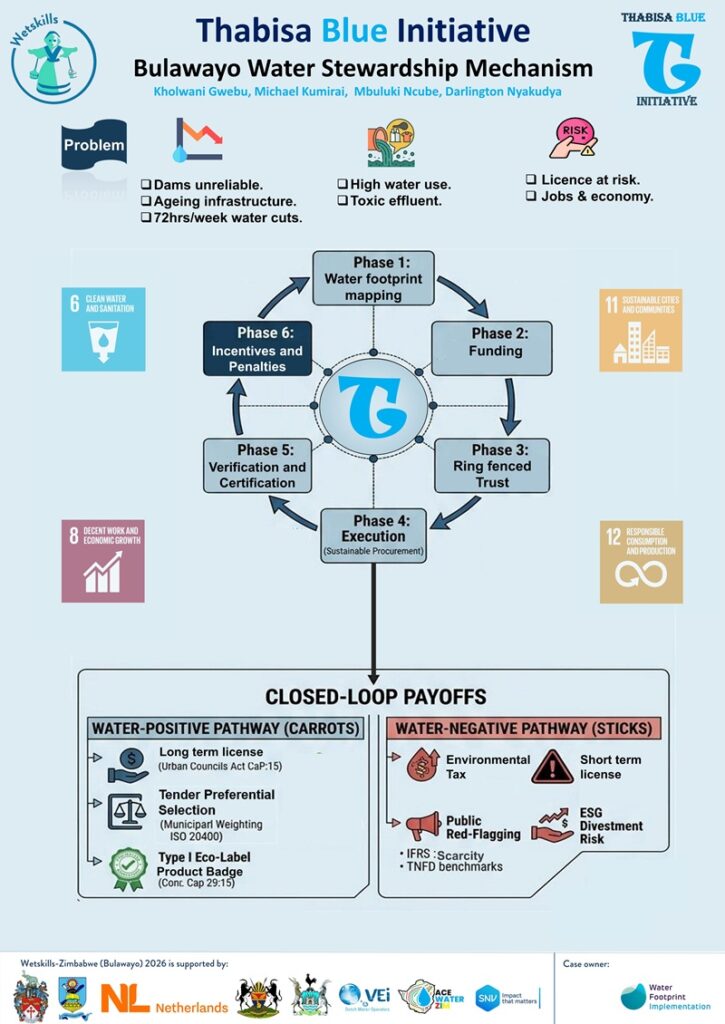
Bulawayo is one of southern Africa’s most water-stressed cities, hosting large industries whose continued operation depends on reliable water and clean rivers. This case asks how water footprinting and water compensation can be used to motivate Bulawayo’s major water-using corporates to invest in local water projects, secure their long-term licence to operate, and earn credible, disclosable credits for doing so. The team will design a ‘Bulawayo Water Stewardship Mechanism’ that links corporate water footprints to verifiable catchment investments, drawing on the WFN methodology, ISO 14046, the Volumetric Water Benefit Accounting Method, and the SBTN Freshwater framework.
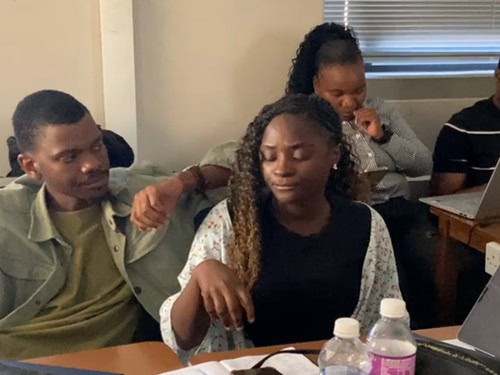
Pitch & Poster – Case 1
Pitch & Poster – Case 2 – Winning team!
Case owner: SNV Netherlands Development Organisation
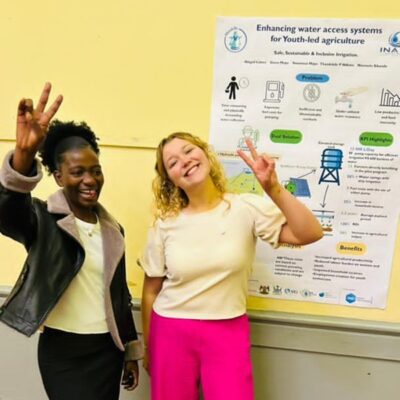
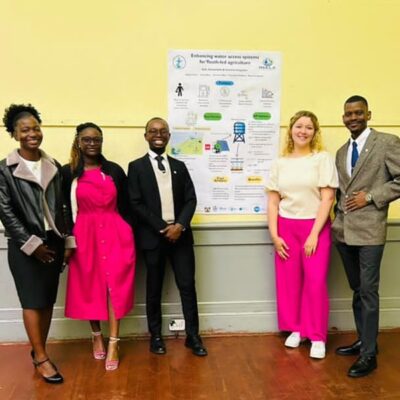
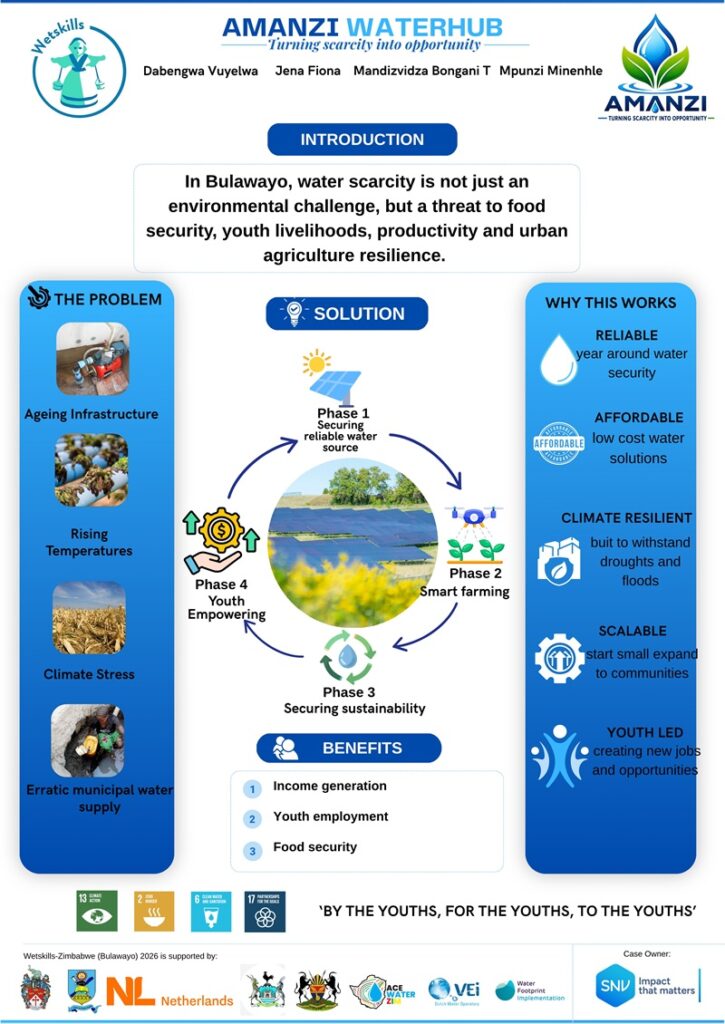
Youth-led urban agriculture enterprises are creating jobs and meeting growing city demand through innovative production systems such as poultry, hydroponics, and mushroom farming. Due to water shortages, rising temperatures and prolonged dry they are facing problems, limiting productivity, planning and growth – especially for water-sensitive systems. Through SNV’s Youth Employment and Entrepreneurship (YEE) Project, this case explores practical, affordable and climate-resilient water solutions that can help young entrepreneurs secure a reliable water supply, and scale sustainable urban food production and the competitiveness of youth-led enterprises.
Case owner: SNV Netherlands Development Organisation
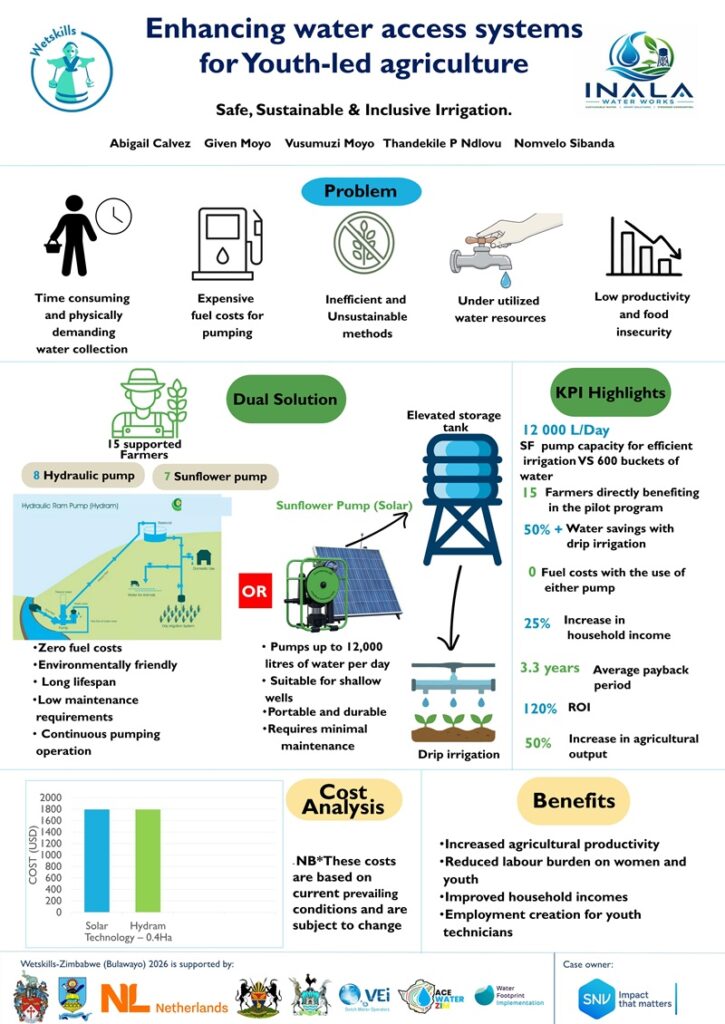
Umzingwane District in Zimbabwe’s Matabeleland South has rivers and shallow groundwater that is used for irrigated horticulture. Through SNV’s Youth Employment and Entrepreneurship (YEE) project, young farmers are running small gardens that support household incomes and local food supplies. Yet water access for production remains a key barrier: many rely on bucket collection from rivers and wells – time-consuming, physically demanding and risky – while others use diesel pumps that raise costs and pollution. This case calls for innovative, affordable and environmentally sustainable water solutions that reduce labour, improve safety and boost irrigation efficiency so youth-led enterprises can grow.
Pitch & Poster – Case 3
Pitch & Poster – Case 4
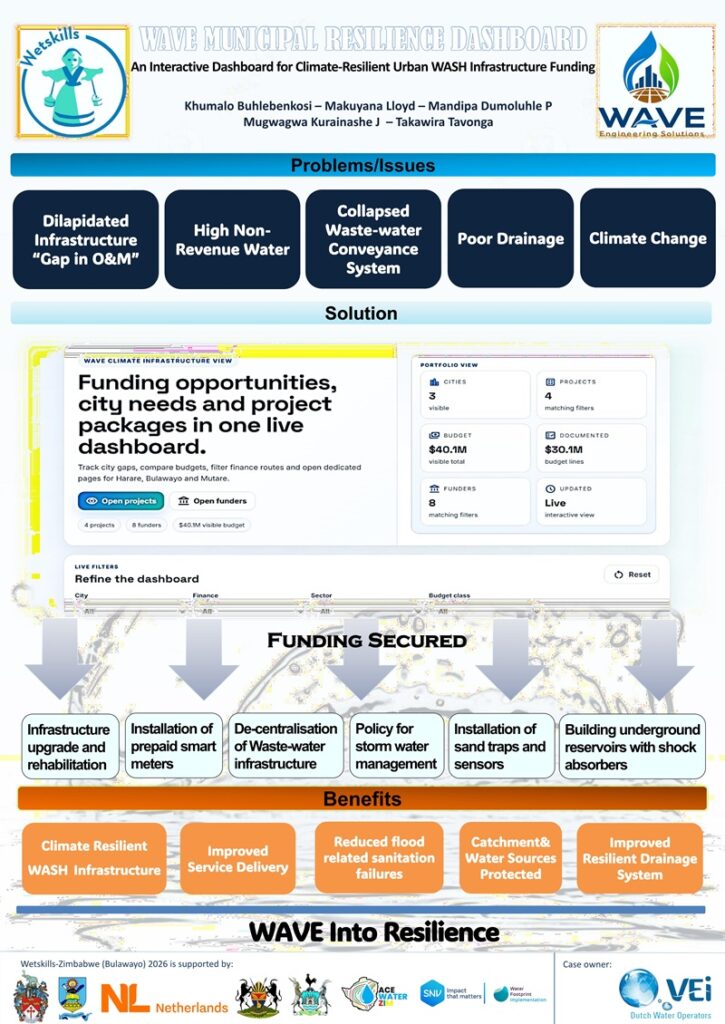
Case owner: WaterWorX project WOP Zimbabwe (CoB, CoH, CoM)
This case presents an opportunity to build resilient water supply, sanitation and catchment infrastructure under climate stress for Harare, Bulawayo and Mutare, Zimbabwe’s three largest municipalities. Harare has a centralised water treatment and supply; groundwater and river sources; experiences electricity shortages, urban growth pressures, and sanitation capacity constraints and wastewater treatment plants at overcapacity. Bulawayo faces similer problems in a drought-prone area, while Mutare is a smaller city with catchment-related vulnerabilities, depending on surface water. The common issues are ageing WASH infrastructure, limited integrated catchment management, funding gaps, governance fragmentation, and vulnerability to flooding and drought cycles.
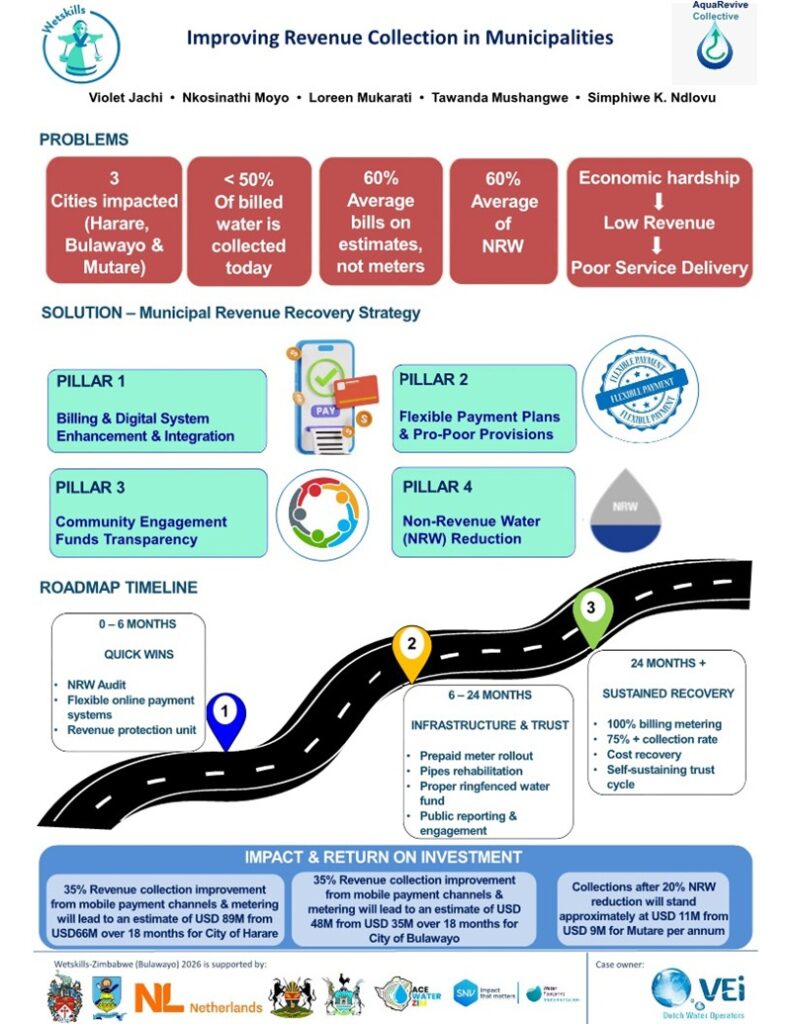
Case owner: WaterWorX project: WOP Zimbabwe (CoB, CoH, CoM)
Revenue collection for water services is the engine that ensures the smooth flow of municipal work – funding essential water treatment chemicals, infrastructure maintenance, and day-to-day pumping operations. Currently, municipalities across Zimbabwe are struggling to collect even half of what they bill. This low collection rate is driven by several compounding factors: Trust Deficit & “Dry Taps”; Estimated Billing, based on estimates rather than actual recorded usage; Non-Revenue Water (NRW), due to physical leaks and unauthorized connections; Economic Strain: without efficient revenue collection, the municipality cannot maintain the infrastructure, which leads to poorer service delivery, which in turn makes citizens even less willing to pay. The case is on turning the tide of Municipal Revenue Collection.
Pitch & Poster – Case 5
Pitch & Poster – Case 6