From youth participation to real impact in water and food systems
Blog from Ghenwa Kataya, Wetskills team member in Lebanon)
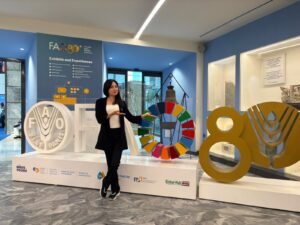
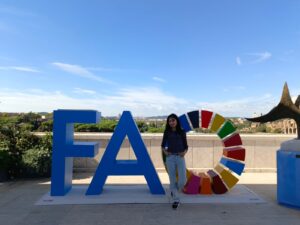
Rome has a way of bringing different paths together. During the World Food Forum (WFF) flagship event, held from 8–16 October 2026 at FAO headquarters in Rome and online, I found myself reflecting on the connections between youth leadership, water innovation and the future of agrifood systems. As a Wetskills Program Officer and a regional Youth Policy Board member for the Near East and North Africa (NENA) region at the WFF Youth Assembly, these connections are not just professional interests; they are at the heart of the work I care about.
Under the theme “Innovate today. Nourish tomorrow,” the WFF brought together discussions on global youth action, science and innovation, and investment. For me, two panel discussions offered a particularly valuable opportunity to reflect on how we can move from giving young people a voice to enabling them to turn their ideas into lasting change.
From youth participation to influence
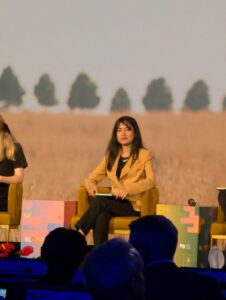
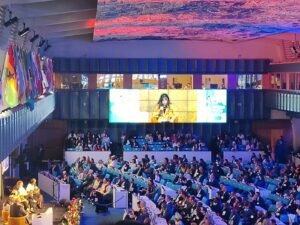
During the Grand Opening Ceremony, I joined the intergenerational panel “Youth Driving Generational Renewal in Agrifood Systems,” moderated by Maximo Torero, FAO Chief Economist, alongside representatives of the WFF Young Scientists Group, Youth Food Lab and youth chapters.
My contribution focused on progress in institutionalising youth engagement. Meaningful youth engagement requires investment in youth, supportive institutional structures, collaboration and genuine intergenerational dialogue. The next challenge is to keep these pathways open and ensure that participation leads to influence.
This message continued during the NENA Mainstage session, where I joined the panel “Partnering for NENA Youth in Food Systems – From Policy to Action” as a representative of the WFF Youth Policy Board.
In the region, young people have been documenting their priorities through consultations, surveys and meetings, helping shape recommendations and initiatives related to agricultural innovation, education, sustainable practices and water management.
The challenge is not a lack of ideas or motivation. Young people face limited access to finance, markets and employment, a gap between education and labour-market needs, climate pressures, water scarcity and, in some countries, displacement and instability. Just as importantly, recommendations do not always reach the institutions where decisions are made.
I highlighted three changes needed: moving from listening to institutional participation; connecting recommendations to investment, knowledge, technology, markets and implementation; and establishing accountability so young people can understand what happened to their proposals and why. Governments, FAO, research institutions, the private sector, donors and young people all have a role to play. Youth must be partners in designing, implementing and evaluating solutions, not simply participants in consultations.
Where Wetskills meets the agrifood challenge
These discussions strongly reflect what Wetskills stands for. Through its international, multidisciplinary challenge programmes, Wetskills brings students and young professionals together to work on real-life water challenges presented by companies and governmental organisations. In two-week programmes, participants exchange knowledge across disciplines and cultures, develop creative but realistic concepts, and build international networks.
For me, this is youth empowerment in practice: creating the conditions for young people to move from potential to practical solutions.
Water is central to this connection. It underpins food security, agricultural productivity and the resilience of rural communities. In NENA, where water scarcity intersects with desertification and land degradation, improving water management is inseparable from transforming agrifood systems. Supporting young people to innovate in water is therefore also an investment in sustainable agriculture, livelihoods and the future of food.
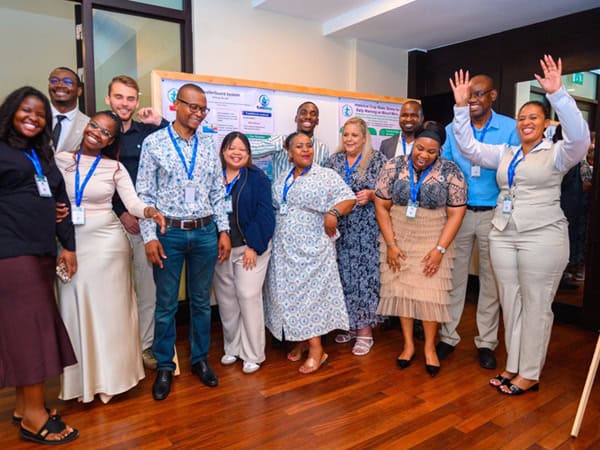
My own connection with Wetskills began as a participant in Wetskills-Tunisia 2025, the first Wetskills edition in Tunisia, held from 18–30 October 2025. Over 12 days, multidisciplinary teams worked on real water challenges, learning to approach complex problems through collaboration, creativity and different professional perspectives.
The experience stayed with me beyond the programme. After Tunisia, I joined the Wetskills team as a Program Officer, taking a new step from participant to someone helping create opportunities for other young people. That transition has made the connection between youth empowerment and real-world impact even more meaningful to me. When young people receive the right support, networks and opportunities, they can develop solutions while building the confidence and skills to carry them forward.
Wetskills is a living example of the pathway I discussed at the WFF: participation becomes meaningful when young people have the tools, relationships and opportunities to translate their ideas into action.
When plans change: youth, uncertainty and resilience
My journey with Wetskills did not end in Tunisia. Following my participation in Wetskills-Tunisia 2025, I joined the Wetskills team as a Program Officer, taking a new step from participant to someone helping create opportunities for other young people. I was looking forward to my first mission as a Wetskills supervisor at the event we were planning to organise in Jordan in March-April 2026. However, the event was postponed as the war escalated again in Lebanon.
Although this change was disappointing, it did not diminish my enthusiasm for Wetskills or my commitment to youth empowerment. Instead, it reminded me how closely professional opportunities are connected to the realities young people face in our region. Conflict and instability can disrupt plans, limit mobility and create uncertainty at precisely the moments when young people are trying to build their skills, careers and futures.
These experiences echo the challenges I highlighted during the WFF NENA panel: water scarcity and climate pressures are already placing significant demands on our communities, while instability, limited access to opportunities and the distance between young people and decision-makers can make it even harder to turn ideas into action.
Resilience is important, but young people should not have to navigate uncertainty alone. We need supportive institutions, strong partnerships and platforms that sustain learning, collaboration and innovation even when circumstances change. This is one reason I value Wetskills: it creates connections between young people and the water sector, giving them opportunities to learn together and develop practical solutions.
I remain enthusiastic about my work with Wetskills and look forward to joining the team on a future mission. Sometimes, the path forwards changes, but the purpose remains the same: empowering young people to contribute to a more sustainable future.
A lesson in water from Rome
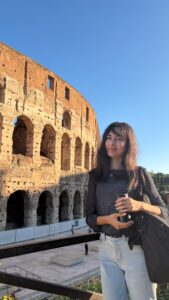
Beyond the conference rooms, Rome offered another perspective on the value of water. Across the city, the nasoni- the small public drinking fountains-make drinking water freely accessible in everyday public spaces. Rome has approximately 2,500–2,800 of these fountains, supplied with the same water that reaches homes. Installed from 1874 to support public health and hygiene, they reflect a long-standing commitment to making water accessible to residents and visitors.
This culture has much older roots. Ancient Rome developed an extensive water infrastructure, with eleven major aqueducts supplying its monumental fountains and public basins. Parts of central Rome still receive water through the Aqua Virgo aqueduct, which was built in 19 BC. Today, the continuous flow of water through Rome’s iconic public fountains, or nasoni, keeps the supply fresh and prevents stagnation, while the excess water is fed directly into the city’s drainage system to help flush the sewers.
Walking through a city where water is so visible and accessible reminded me that innovation is not always about inventing something new. It can also mean maintaining shared infrastructure, planning for the long term and recognising water as a public good. For young water professionals, this is a powerful lesson: technical solutions matter, but so do the institutions, investment and public values that sustain them.
The road ahead: turning ideas into action
Leaving Rome, I return to a message that connected both WFF journey with my Wetskills journey: young people are ready to contribute, but their ideas need pathways to become reality. That means investing in capacity building, connecting innovation with finance and implementation, and ensuring that youth participation leads to measurable outcomes.
Wetskills offers one practical way to begin. By bringing young people together around real water challenges, it creates space for new perspectives, international cooperation and solutions that can contribute to a more sustainable agrifood system.
From Tunisia to Rome, and towards my next mission with Wetskills, I am reminded that empowering young people is not an end in itself. It is how we build the knowledge, relationships and solutions needed for a more water-secure and sustainable future.
All roads may lead to Rome, but the real journey begins when we turn shared ideas into collective action.
About the author
Ghenwa Kataya is a Wetskills Program Officer and a NENA regional Youth Policy Board member at the World Food Forum Youth Assembly. An environmental scientist based in Lebanon, she holds a PhD in Earth and Environmental Sciences from Lebanese University, with research on biochar from organic waste for water treatment and sustainable agriculture, and works on youth capacity building in climate change.