
By Loay Alatrash (Wetskills Regional Manager MENA Region)
This pilot project is part of an effort to identify and develop alternative water sources in response to increasing water scarcity, climate variability, and supply unreliability. The core idea originated during the Wetskills Palestine program in 2022, where a multidisciplinary team of five participants developed a concept focused on decentralized rainwater harvesting as a practical and scalable solution. Following further refinement, the concept was taken forward for implementation by World Waternet. During this phase, the original idea was optimized to better align with local conditions, user needs, and operational feasibility.
The pilot was designed to test rainwater harvesting systems across different user groups in order to assess their technical performance, usability, and potential for wider replication. By targeting households, agricultural producers, and educational institutions, the project aims to demonstrate how decentralized storage can enhance water security, reduce pressure on existing freshwater networks, and increase awareness of sustainable water management practices.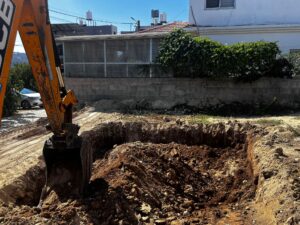
The pilot project ran from September to August 2025 and focused on three application areas: households, farms and schools.
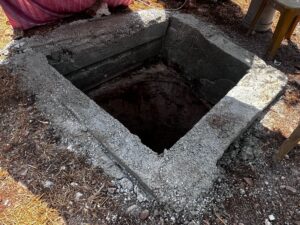
Household application A 30 m³ pear-shaped underground well was constructed for a woman managing livestock and crops. The system allows her to collect rainfall during winter and use the stored water to supplement her supply during summer. Early feedback indicates improved reliability of water for her animals and small-scale agriculture.
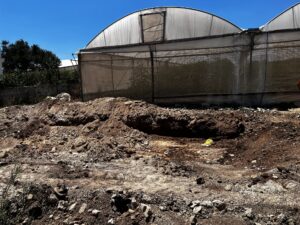
Agricultural application A 110 m³ agricultural pool was built for three farmers with greenhouses. The pool captures winter rainfall and reduces the need for freshwater irrigation during dry months. This helps buffer the farmers against both climatic variability and potential network interruptions.
 Schools and education Rainwater harvesting systems are being installed in schools, with construction scheduled around the start of the school year. The systems are expected to lower institutional water consumption and serve as practical educational tools, allowing students to learn about the water cycle, climate adaptation and resource management through direct observation.
The performance of these systems is being monitored over time, including storage volumes, reliability, maintenance needs and user satisfaction. The findings will inform design parameters for wider replication in Salfit and other municipalities.
Wetskills Team member Loay Alatrash (Manager MENA Region) is project lead for this project at World Waternet. If you want more information, please email him at loan.alatrash@wetskills.com.